Who is new, and what they are missing
Read more
A resident who moved for work has a built-in network from the first day: coworkers, a supervisor, a lunch table. The people around them often do not. A spouse who works remotely, a parent at home with young children, or a retiree who followed grown children to a new town can go days without a real conversation. Those household members use the building the most during the day, and they are the ones amenity design can help most.
Newcomers also lack local knowledge. They do not know which grocery store is good, where the kids can play soccer, or which restaurant is worth the drive. A building that helps answer those questions, through a staffed desk, a resident board or simply a lounge where neighbors trade tips, becomes part of how people learn the town.
That points to a few design goals. Shared spaces should sit where people already pass every day. They should allow someone to be near others without being forced into conversation. And they should be easy for a small management staff to program, because events give shy newcomers a reason to show up.
Put gathering space on the daily path
Read more
The most useful social space in many communities is the area beside the mail and package room. Everyone goes there, often daily, and a few comfortable seats, a coffee station and a bulletin board turn a chore into a chance encounter. Place the lounge so residents walk past it on the way to packages, the fitness room or the pool gate, and give it glass walls or wide openings so people can see who is inside before deciding to join.
Vary the seating so people can choose their distance. A long communal table invites strangers to sit together. Small groupings of two or three chairs suit a quick conversation. Window perches and single lounge chairs let someone read or work near others without joining a group. A room full of large sofas arranged for a party tends to sit empty on an ordinary Tuesday.
- Mail and packages next to the lounge, not down a back corridor
- A coffee or water station visible from the entry
- A physical board for neighbor notes, local tips and event flyers
- A lending shelf for books, board games and kitchen tools
- Seating at the pool gate and dog park entrance, facing the path
Event kitchens residents can actually host in
Read more
A clubroom kitchen is where newcomers host their first gathering, and it works best when the host can face the guests. An island or peninsula that looks into the room keeps the cook in the conversation. Give it more counter than a typical unit kitchen so a potluck can be laid out as a buffet, plus a full-size refrigerator with room for guests' dishes, an ice maker, a dishwasher and a sink large enough for sheet pans.
Storage is easy to underbuild. Shared serving platters, a coffee urn, folding tables and holiday decorations all need a lockable home near the kitchen, or they end up in the leasing office. Surfaces should handle spills and hot pans without special care, and lighting should be dimmable so the room works for both a morning welcome breakfast and an evening party.
Plan for a private event and an open lounge at the same time. If a resident reserves the kitchen for a birthday, the rest of the clubroom should still be usable. A sliding partition, a separate reservable room or a layout that lets the kitchen zone close off keeps one party from taking over the building.
Pet areas that start conversations
Read more
Dogs introduce their owners faster than any program a manager can plan. A dog park that people linger in, instead of passing through, has shade, benches that face each other, a water station and lighting for early morning and evening walks. A separate area for small or shy dogs lets more owners use it with confidence. Double-gated entries reduce escape worries, and surfaces should drain well and clean easily.
Place the dog park where it can be seen from walkways and windows, which makes it feel safe and invites people to stop. A pet wash near a building entrance saves residents from bathing a muddy dog in a tub, and a bench nearby gives owners waiting their turn a reason to talk. In colder or hotter climates, a small indoor pet room can carry the same social role through the harshest season of the year.
Coworking for spouses and remote workers
Read more
In a community built around a single large employer, it is tempting to skip coworking because most residents commute to a job site. But the household members who work remotely, and residents on rotating shifts who handle paperwork on their days off, often need it most. A good coworking room also keeps the building feeling occupied during the day, which matters for people who would otherwise spend it alone.
Mix open tables with a few enclosed spaces. Small rooms for video calls are usually the scarce resource, so plan more of them than a first draft suggests. A bookable meeting room with a screen serves residents who need to meet a client or host an interview. Acoustic panels, task lighting, plenty of power at every seat and a printer close by matter more than statement furniture. Placing coffee nearby gives remote workers a natural break where they meet each other.
Program-ready rooms for community building in apartments
Read more
Events give newcomers permission to show up. A welcome breakfast, a trivia night, a cooking demo with a local chef, a kids' craft afternoon or a talk from someone at the chamber of commerce about the area all need a room that can be set up and cleared quickly by a small staff. Single-purpose rooms such as a theater or a game room look good on a list, but a flexible room that handles all of these is used far more often.
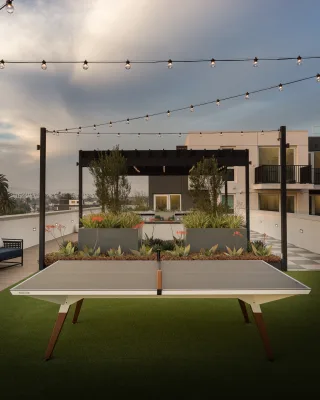
Design that room around setup. Stackable chairs and folding tables need a storage closet right next door. A durable floor should handle yoga mats, spilled juice and rolling carts. A sink, a counter for serving, a screen with simple connections and dimmable lighting cover most events. Outdoors, a lawn or courtyard with power outlets and string lighting extends the same idea to food trucks, movie nights and seasonal markets.
A little thought on resident-led programming helps too. A reservation process that is easy to understand, posted rules for cleanup and a closet residents can access for basic supplies make it more likely that neighbors start their own book club or running group.
Designing amenities with Level Up Interiors
Read more
Level Up Interiors plans amenity and common areas for multi family, student housing and senior living communities. We have completed projects in thirteen states, and our multi family gallery shows completed work.
By the Level Up Interiors team. Published 2026-10-10.