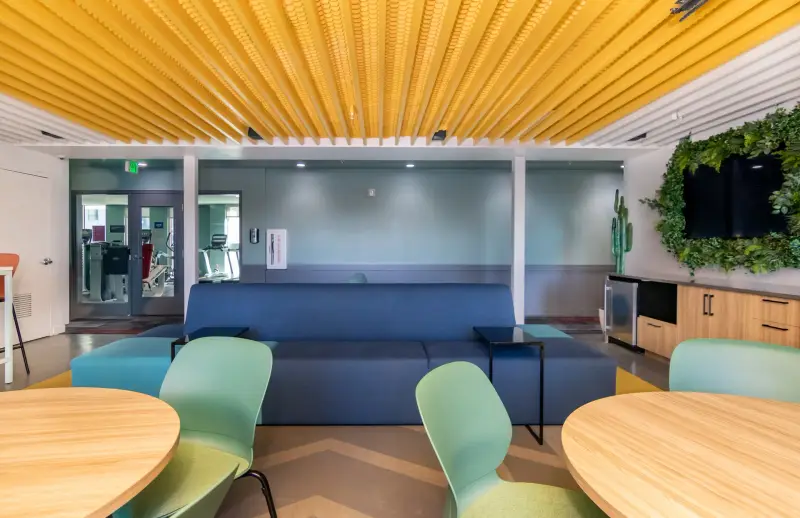
Step one: a purchasing-ready spec package
Read more
Procurement starts when the owner approves the selections and the team confirms exactly what is being bought. Each item needs a spec sheet with a tag number, description, dimensions, finishes and fabric, quantity by room, vendor, and any installation notes. Items the owner is supplying, pieces being reused and scope that has been cut should be marked clearly so purchasing is never working from an old version of a room.
Before orders go out, the team checks each item against the room, the budget and the schedule. A sofa that suits the concept still has to fit through the corridor and into the elevator, and arrive before the space opens.
Purchase orders, deposits and acknowledgments
Read more
A purchase order turns a selection into a contract with the vendor. It is issued by whichever party holds the purchasing responsibility, which may be the owner, a purchasing agent or the design firm buying on the owner's behalf, and that choice should be settled before the first order. It should state the item and tag, quantity, finish and fabric, unit price, ship-to address, freight terms, required ship date and any delivery or labeling instructions. Many furniture vendors require a deposit before production, with the balance due before shipment, and a late payment can cost the order its place in the production queue.
The vendor's order acknowledgment is the document to check closely. It confirms what the vendor actually entered: quantity, finish, price, freight and estimated ship date. Mismatches caught here cost little to fix. Mismatches found when the crates are opened can cost the opening date. The procurement log should show, for every line, what was ordered, what was acknowledged and what is still open.
Expediting: keeping lead times honest
Read more
A lead time quoted at bid is an estimate. Production capacity, material shortages, fabric approvals and payment status all move it. Expediting is the routine of contacting vendors on a set schedule, recording changes and flagging any item whose new date threatens the opening.
Good expediting separates confirmed dates from hoped-for dates. When an item slips, the team works out whether it affects opening, whether an approved alternate exists and whether the room can open in stages. Customer's-own-material fabric needs its own tracking, because the fabric has to reach the furniture maker before production can start. Owners should get a status report that names what changed, the decision needed and the schedule effect, rather than a spreadsheet to decode. On a project with hundreds of line items, a short exceptions list each week is more useful than a full log nobody reads.
Freight terms and who carries the risk
Read more
Freight terms decide who pays for shipping and who owns the product, and the risk of damage, while it is on the truck. Under FOB origin, often written FOB factory, ownership passes to the buyer when the goods leave the vendor, so the buyer pays freight and files any damage claim with the carrier. Under FOB destination, the vendor keeps ownership and risk until the goods arrive. Many furniture vendors quote FOB origin with freight billed separately, which is why freight belongs in the budget from the first estimate.
The method of shipping matters too. Boxed goods may move by common carrier on shared trucks, while large or fragile pieces may need blanket-wrapped or dedicated delivery. Most jobsites cannot accept dozens of carrier deliveries arriving on their own schedules, which leads to the next step.
Receiving, inspection and warehousing
Read more
On larger projects, product ships to a receiving warehouse instead of the jobsite. The warehouse checks each delivery against the purchase order, notes visible damage or short counts on the carrier's delivery receipt before signing, and opens cartons to look for concealed damage. Carriers set short windows for reporting concealed damage, so inspection should happen soon after arrival, not on install day.
The warehouse then holds product by room or phase until the building is ready, and sends it to site in planned loads. That costs storage and handling fees, but it means damaged or wrong items surface well ahead of installation, while there is still time to reorder.
Sequencing delivery with construction
Read more
Delivery has to follow room readiness, not the order in which product arrived. Floors, paint, ceilings, lighting, power and final cleaning should be done in a space before furniture goes in. The team also needs the loading area, elevator reservations, staging space and protection requirements confirmed with the general contractor.
When areas turn over at different times, such as a leasing office before the clubroom, deliveries are split to match. Bringing everything early invites damage and crowds a site still under construction. Bringing it late squeezes assembly, styling and punch into the days before opening. The FF&E installation checklist covers site readiness and install day in more detail.
Installation, punch and closeout
Read more
Installation crews unload, unpack, assemble and place product to the furniture plan. Designers on site adjust orientation, hang and level art, set accessories and catch problems a delivery manifest will not show. Crews remove cartons and packing materials as they go, keeping any packaging needed for a damage claim.
The punch list starts during installation: missing pieces, damage, wrong finishes and incomplete assembly, each with a next step, whether that is a field fix, a vendor claim or an owner decision. Closeout gives the owner a usable record: the final item list by room, vendor and finish information, care and warranty documents where vendors provide them, attic stock counts and any open issues. That record is what property management uses for repairs and reorders years later.
Level Up Interiors on procurement
Read more
Level Up Interiors handles FF&E selection, procurement, expediting and installation with designers on site. Completed projects include Kara, a multi family community in Los Angeles, and Urbane, a student living property in Tucson, Arizona.
By the Level Up Interiors team. Published 2026-10-10.