Glare and solar gain in interior design for hot climates
Read more
Heat and glare enter a building through its glazing, and the west and south walls take the worst of it. Glass type, overhangs and exterior fins are architectural decisions, usually fixed before an interior designer is hired, so the interior work begins with the window treatment and the floor plan.
Shading on the outside of the glass stops heat before it enters the room; shades on the inside cut glare but release some heat into the space. Where exterior shading is not possible, solar roller shades do most of the work. Their openness sets the trade-off: a tighter weave blocks more glare and heat but hides more of the view, and a darker fabric on the room side keeps the view clearer than a white one, which glows in direct sun. In a double-height lobby, motorized shades on a schedule prevent the common failure where shades stay up all afternoon because no one can reach them.
Furniture placement does the rest. Avoid putting a work bar or a television wall where people face west glass in the late afternoon, and keep reading chairs out of the band of direct sun that crosses the floor near the windows. Light ceilings and matte finishes spread daylight deeper into the room without the hot spots that polished stone and lacquer bounce back.
Sun resistant fabrics: fiber, dye and color
Read more
Fading comes from ultraviolet light breaking down dye, and the way a fabric is dyed matters more than its brand name. Solution-dyed fibers, where pigment is added to the liquid polymer before the yarn is spun, carry color all the way through each strand. Solution-dyed acrylic has the longest track record on outdoor cushions, and solution-dyed polyester and olefin offer lower-cost options. Piece-dyed or printed fabrics, where color sits on the surface, fade faster in direct sun no matter how good they look on the sample board.
Color choice extends the life of any fabric. Saturated reds, deep navies and bright oranges show fading first; mid-tones, heathered weaves and small patterns disguise gradual change. Ask manufacturers for their lightfastness testing and compare results between options instead of trusting the word outdoor in a product name.
The same logic applies indoors. A lobby sofa that faces a wall of west glass can get more sun than many patio chairs, and a cotton blend there will streak along the cushion tops. Wood finishes bleach or amber, rugs lighten in a clear outline of the window, and framed art fades unless it is glazed with UV-filtering acrylic or hung on a wall that never sees direct light.
Materials that stay cool to the touch
Read more
Surface temperature is a comfort and safety issue on any pool deck or patio. Dark materials absorb more of the sun's energy, and dense materials like metal and stone hold onto it, so a black metal armrest or a dark granite tabletop in full sun can become too hot to touch by midday. A few patterns hold across hot markets.
- Light-colored powder-coated aluminum runs much cooler than dark frames, and sling seats shed heat faster than solid seats.
- Hardwoods such as teak warm more slowly than metal and feel comfortable on bare skin, though they weather to gray unless oiled.
- Light, textured porcelain pavers or coated concrete are easier underfoot than dark stone, and artificial turf can run hotter than the paving around it.
- Glass and stainless tabletops throw glare and heat up quickly; light stone-look porcelain or high-pressure laminate tops are easier to live with.
- Indoors, faux leather and vinyl near sunny windows turn hot and sticky against skin, while woven performance fabrics breathe.
Shade structures and where the shadow actually falls
Read more
Overhead shade decides, more than any other choice, whether an outdoor amenity gets used in summer. The options trade cost, flexibility and durability against one another.
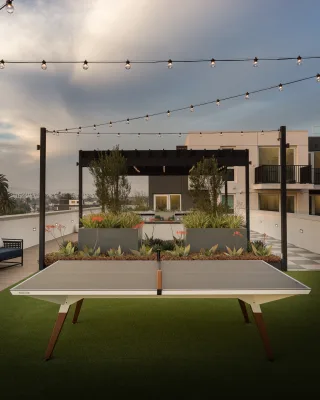
Market umbrellas cost the least and move easily, but they need heavy bases, they must be closed in wind, and their canopies fade like any other fabric. Shade sails cover large areas with a clean look; they rely on engineered posts and attachment points and need to be designed with the architect or structural engineer rather than added at the end. Pergolas with open slats break the sun into a pattern but stay hot at midday, while solid or louvered roofs give real cover and can carry ceiling fans and lighting.
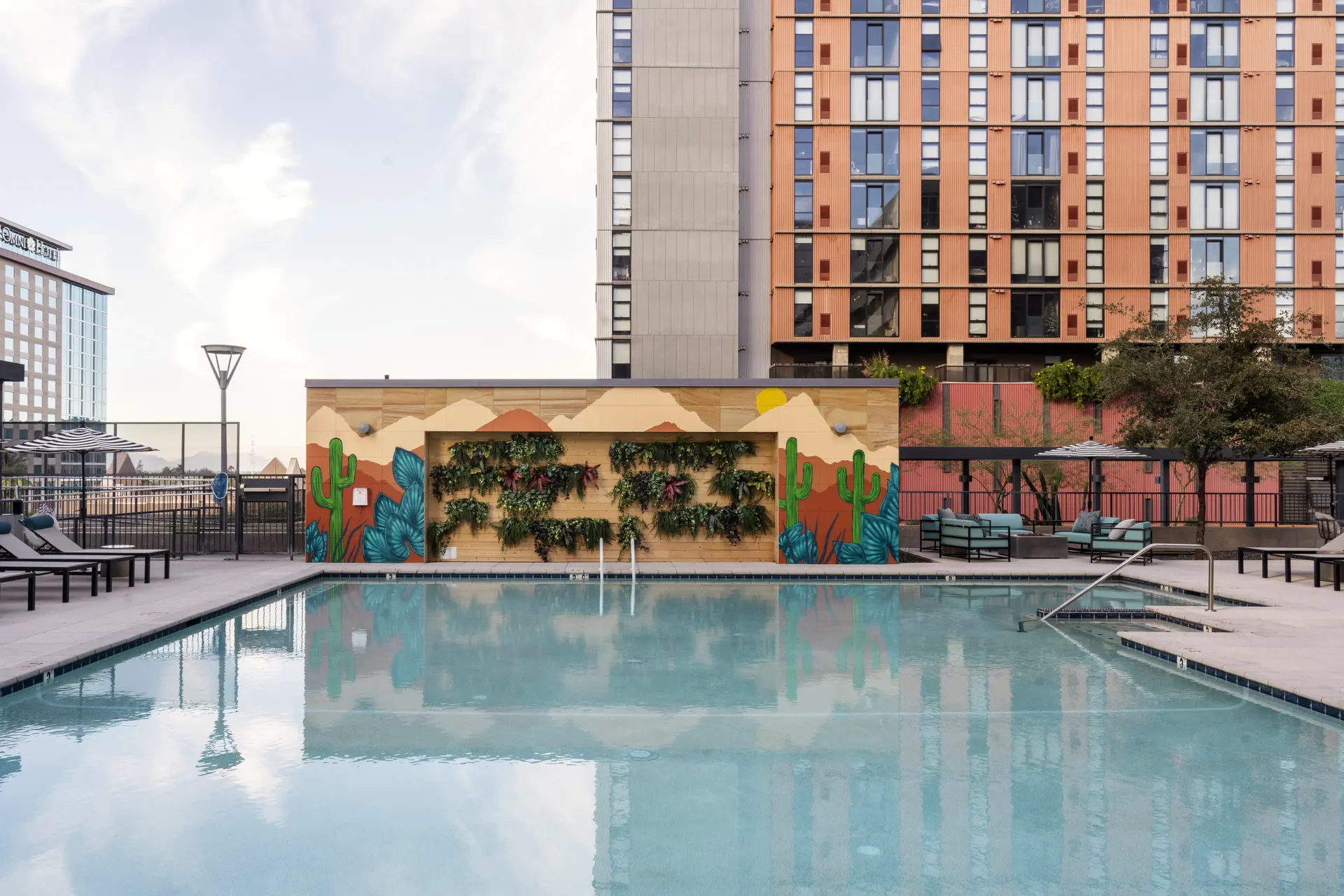
The critical step is tracing the sun at the hours residents use the space. A pool deck is busiest on late afternoons and weekends, when the sun sits low in the west and slides under a high canopy. Lay out shade to cover loungers and dining at those hours, not at noon on the day the drawing was made. Misting systems help in dry heat, but where water is hard the nozzles clog and spot nearby glass and furniture, so plan for the upkeep or leave them out.
Outdoor furniture for hot climates that outlasts UV
Read more
Ultraviolet light is as hard on frames as it is on fabric. Cheap resin chairs chalk and turn brittle, and low-grade vinyl wicker cracks and unravels. Read warranties closely, because frame coverage and fabric fade coverage are often written separately with different terms. When comparing outdoor furniture for hot climates, look at what each component is made of.
- Frames: powder-coated aluminum resists rust and stays light enough to rearrange, though light pieces may need weight or anchoring in windy spots. HDPE lumber made from solid recycled plastic holds its color with little upkeep.
- Woven pieces: HDPE wicker with UV inhibitors holds up far better than PVC wicker.
- Seats: slings dry fast, stay cooler and never need to be stored; cushions are more comfortable but need quick-drying open-cell foam, removable covers and a place to go when storms roll in.
- Hardware: stainless fasteners avoid the rust streaks plain steel leaves on finishes.
Comfort indoors without overcooling
Read more
Residents arriving from a scorching parking lot want cool air, but a lobby set cold enough to feel good for the first minute feels like a refrigerator to the staff member who sits there all day. Thermostat settings belong to the mechanical engineer and the operator, yet interior design shapes how a room feels at a given temperature.
An entry vestibule keeps hot air out of the lobby each time the door opens. Ceiling fans let a room run warmer while still feeling comfortable, and they cost little to operate. Seating and workstations should sit away from supply diffusers, which blast cold air on anyone parked beneath them. Wood, wool-blend textiles and upholstered wall panels make a cool room feel inviting rather than clinical, and warmer light color temperatures help as well.
Zoning matters too. A fitness room needs more cooling than a lounge, and a coworking area full of laptops behaves differently from a mail room people pass through. Where the pool deck meets a clubhouse, self-closing doors and an entry mat keep the conditioned room from being propped open to the heat all afternoon. Large operable glass walls look appealing in renderings, but in a hot climate they stay shut most of the year, so specify them knowing they will mostly function as windows.
Delivering and storing furniture in the heat
Read more
Heat affects goods before anyone uses them. Upholstery, adhesives, mattresses, candles, artwork and electronics can all suffer in a closed trailer or an unconditioned storage unit in a desert summer. Schedule deliveries for early morning, unload directly into conditioned space where possible, and avoid staging furniture on an open deck or in a building whose air conditioning is not yet running.
Order attic stock for the items that wear fastest in sun, usually cushion covers and umbrella canopies, so replacements match the original dye lot when the first set fades.
Our approach in high-sun markets
Read more
Level Up Interiors is a commercial interior design firm in Irvine, California, with completed projects in Arizona, Texas, Florida and California among the thirteen states where we have worked. We select fabrics, finishes and outdoor furniture for amenity, lobby and pool spaces with sun exposure in mind, and our receiving warehouse in Southern California inspects goods before they ship to site.
By the Level Up Interiors team. Published 2026-10-10.