
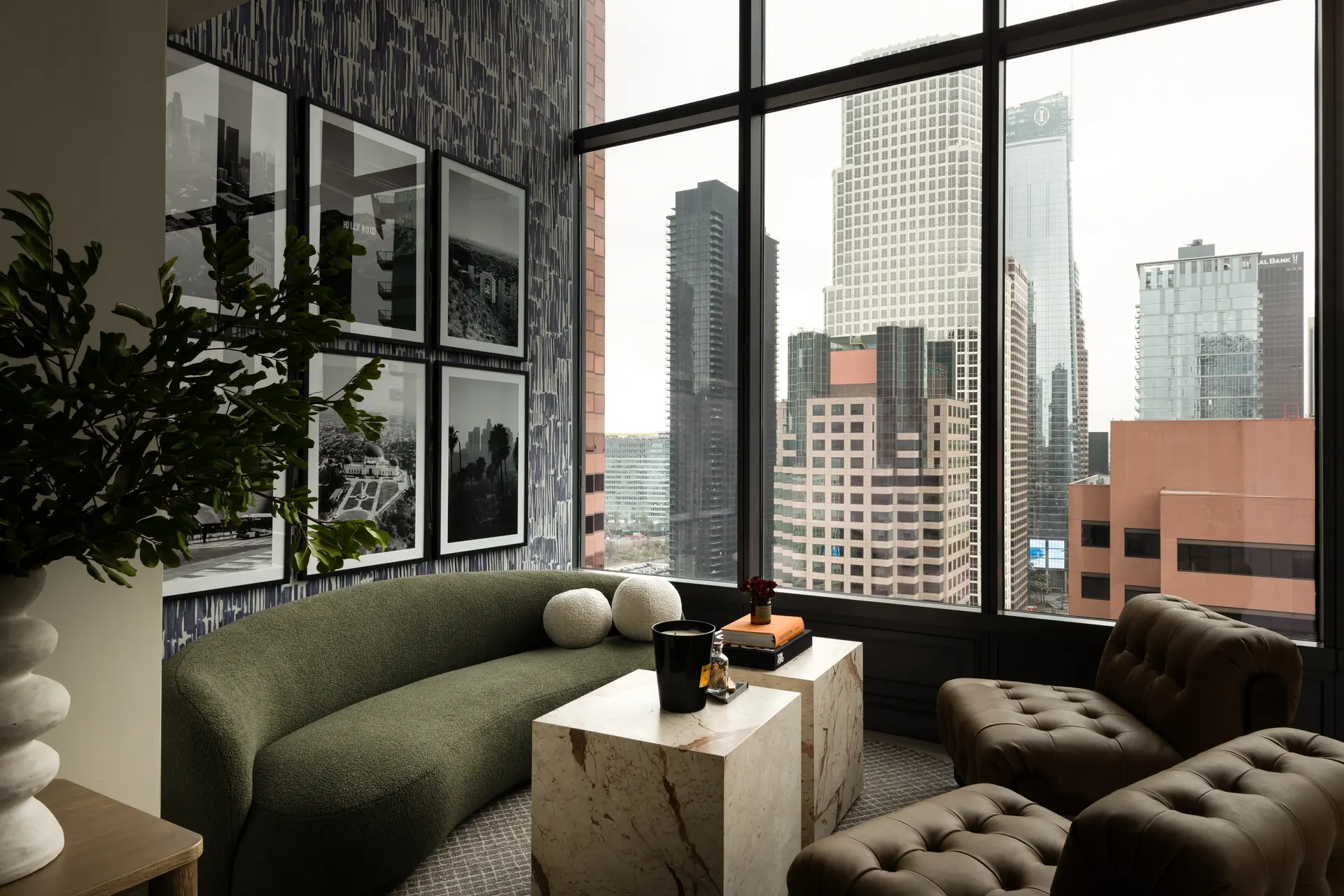
New York
Senior Living and Active Adult Interior Design in New York
Senior living interior design in New York covers independent living, assisted living, memory care and active adult communities, with rooms planned around light, contrast, wayfinding and the families who tour them. Health care is a steady source of local jobs: the New York State Department of Labor reported private education and health services up 19,500 over the year in September 2026.
That workforce includes adult children who take jobs in the region and bring a parent closer. Those families visit with specific questions about safety, comfort and daily life, and the interiors have to answer them before anyone speaks.
Light, contrast and long winters in New York senior living
Read more
Winters are long and cold, which means residents spend more of the year inside. Natural light becomes a design material: sitting areas near windows, sheer window treatments that let daylight through and artificial lighting that supplements the gray months without glare. Older eyes need more contrast between floor and wall, between a handrail and its backing and between a chair and the floor around it.
Glare from polished stone or glossy flooring can read as a puddle or a step to someone with changing vision, so we favor matte, even-toned surfaces. Hot, humid summers bring a different set of needs, and layered textiles and resilient flooring that clean easily cover both ends of the year without making a room feel clinical.
Wayfinding for assisted living and memory care in New York
Read more
A resident who can find their way back to their own room keeps independence longer. We plan corridors with distinct color and lighting at each neighborhood, doorway treatments and memory boxes at resident entries, and landmarks such as a framed piece of art or a piece of furniture at decision points. In memory care, the plan reduces visual clutter and choices that cause confusion, and it keeps routes simple and free of dead ends.
Finishes in these settings have to be easy to clean and gentle on the eye. We choose residential-feeling materials over institutional ones, since the goal is a place that feels like a home with the safety built in rather than the other way around.
Dining rooms and active adult clubhouses in New York
Read more
Dining is the social anchor of a senior community. Tables sized for conversation, chairs with arms and the right seat height, and lighting that makes food look good without casting harsh shadows all affect whether residents stay for the meal. For active adult communities, the clubhouse takes on a different character: a lounge, a card room, a fitness space and a flexible room for classes and events, furnished like a well-kept hotel rather than a facility.
New York's Art Deco lobbies and brownstone detail offer a vocabulary that many older residents recognize. Used with restraint, it gives a community familiarity, and familiarity is comforting for people moving from a longtime home.
The family tour and move-in at a New York senior living community
Read more
Housing demand in the city and its suburbs includes senior living, and tours are frequently attended by adult children as much as by prospective residents. Families look at the entry, the dining room, a model apartment and the staff area. They notice whether it smells clean, whether the lighting is soft and whether residents look comfortable.
A model apartment that shows real furniture at the right scale, with a bed at a comfortable height and a chair a resident can rise from easily, helps a family picture a parent living there. At move-in, the unit should already feel familiar, with space for the pieces a resident brings from home. The City Council approved the City of Yes housing plan in December 2024, and it is projected to produce roughly 82,000 new homes over the next 15 years, a projection and not a count of homes built. The New York City Comptroller also estimated in August 2026 that market rents were roughly 35% above pre-pandemic levels, so families look hard at what a senior community offers.
Questions
What does senior living interior design in New York involve?
It covers the lobby, dining rooms, activity spaces, corridors and resident units for independent living, assisted living, memory care and active adult communities. Light, contrast and wayfinding drive the plan. We also select and procure furniture and manage its delivery and installation.
How is memory care design different from assisted living?
Memory care reduces visual clutter, keeps routes simple and uses landmarks and color to help residents orient themselves. Assisted living keeps more independence in the plan, with clear sightlines and easy-to-use furniture. Both avoid an institutional feel.
Can you refresh a single dining room or lobby?
Yes. A lobby, a dining room or a clubhouse is a common standalone scope, and many communities start there before a larger renovation.
Have you worked on senior living outside California?
Senior living is one of our core property types, and most of our projects are outside Southern California. We have completed work in New York.
More in New York
All 14 links
Property types
- Multi Family Interior Design in New York
- Build-to-Rent Community Interior Design in New York
- Student Housing Interior Design in New York
- Hospitality and Extended-Stay Interior Design in New York
- Workforce and Corporate Housing Interior Design in New York
- Model Home Merchandising in New York
- Clubhouse, Leasing Office and Amenity Design in New York
Follow us
as we create.
 InstagramProjects, Adventures & Memories


Let's get your project moving.
One room or a full renovation. Start with a free quote.
Get a Free Proposal